Why Commercial Rekeying Services Matter for Philadelphia Businesses
I have been working as a locksmith in Philadelphia for over a decade, and one call I get more often than people expect is the one from a business owner who just had an employee leave on bad terms. Maybe the employee was fired, maybe they quit, but the keys they held are still out there. That is when the conversation turns to commercial rekeying services. It is not just about swapping out a lock cylinder. It is about security, liability, and peace of mind. Over the years I have seen what happens when a business tries to save a few bucks by skipping this step, and it never ends well.
What Commercial Rekeying Actually Means
Rekeying is the process of changing a lock so that an old key no longer works, while a new key does. It is different from replacing the entire lock, because the existing hardware stays in place. That is what makes it cost-effective and fast. For a commercial property, this often involves cylindrical locks, deadbolts, and sometimes even access control systems. The locksmith adjusts the pins and springs inside the cylinder to match a new key. The lock itself looks the same and works the same way, but the old keys become useless.
People sometimes confuse rekeying with lock replacement, but there is a real difference. Replacement means pulling out the entire lock and putting in a new one. Rekeying keeps the lock body, which is usually the more expensive part, and only changes the internal mechanism. For a business with multiple doors, the savings add up fast. That is especially true when you are dealing with high-security brands like Medeco or Mul-T-Lock, where the lock bodies are built to last and are not cheap to replace.
When a Business Needs to Think About Rekeying
The most common trigger is employee turnover. If you run a shop, an office, or a warehouse, you hand out keys to staff. When someone leaves, you want to be sure they cannot get back in. But it is not just about disgruntled ex-employees. Sometimes keys get lost. Sometimes a break-in happens, and the lock is damaged but the cylinder is intact. In those cases, rekeying is the smart move. I have also worked with property managers who took over a building and had no idea how many keys were floating around. The first thing they did was call for a full rekey of every exterior door.
Another scenario that comes up is when a business upgrades its key control. Maybe the old system was a mess, with keys copied at the hardware store and no record of who had what. A good rekey can reset everything. You can switch to a restricted keyway, like the ones used by Schlage or Kwikset, where only an authorized locksmith can make duplicates. That puts control back in the owner's hands.
The Difference Between Residential and Commercial Work
Residential rekeying is straightforward. You have a house, maybe a few doors, and you need them all keyed alike. Commercial work is a different animal. A commercial property might have twenty doors, each with a different function. Some have panic bars. Some have commercial door closers that need careful adjustment. Some are tied into an access control system that runs on electronic strikes or magnetic locks. When you rekey a commercial building, you are not just changing one cylinder. You are often setting up a master key system that lets the owner use one key for everything while giving employees keys that only open certain areas.
Building a master key system requires precision. You have to account for the hierarchy of access. The owner gets the top-level key. Managers get sub-master keys that open their department's doors. Entry-level staff get keys that only open the front door and maybe a break room. This is where brands like Ilco and LockNet Hardware come into play, providing the blanks and the expertise to cut the right bitting. A poorly planned master key system can leave gaps in security or, worse, create a situation where one key opens locks it should not. That is why I always recommend working with a locksmith who knows commercial hardware and has experience with master keying.
Hardware Choices That Affect Rekeying
Not all locks are created equal. The lock you choose determines how easy it is to rekey later and how secure it is in the meantime. In Philadelphia, I see a lot of businesses using Schlage and Kwikset for interior doors, and they are fine for light commercial use. But for exterior doors or high-traffic areas, I usually point people toward something sturdier. Medeco and Mul-T-Lock make cylinders that are very hard to pick and even harder to duplicate without authorization. They cost more upfront, but they save money over time because the hardware lasts longer and the key control is tighter.
There is also the question of ANSI Grade 1 certification. That is the highest grade for commercial locks, and it means the lock has passed rigorous tests for durability and security. If you are putting a lock on a door that gets opened a hundred times a day, you want ANSI Grade 1. I have seen cheap locks fail within a year, and then the business has to pay for an emergency callout on top of the cost of a new lock. Spending a little more on a good lock at the start is cheaper than rekeying a broken lock later.
For specialty applications, like a storage unit or a cabinet, Lockey makes combination locks that do not use keys at all. Those are a different solution, but they still fit into the broader conversation about access control. And for padlocks, Master Lock and Abus both offer rekeyable models that let you change the keying without buying a whole new lock. That is useful if you have a gate or a shed that shares a key with the building.
How Rekeying Works in Practice
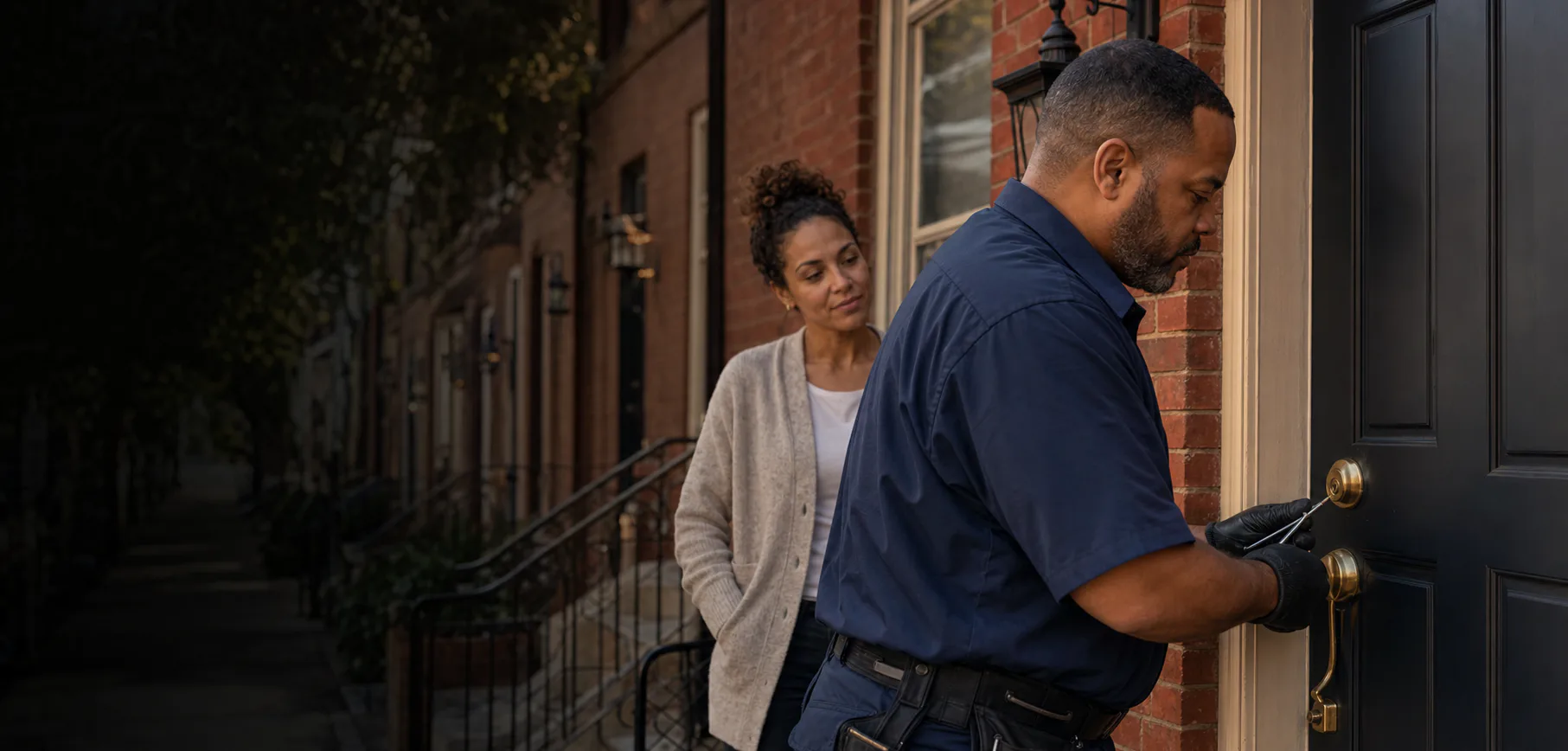
When I arrive for a commercial rekeying job, I start by assessing all the cylinders that need to be changed. I remove each cylinder and take it to my van, where I have a key duplication machine and a full set of tools. I disassemble the cylinder, remove the old pins, and insert new ones that match the customer's chosen key. If the customer wants a master key system, I also cut a master key and test it on every lock to make sure it works smoothly. The whole process for a small office with four or five doors usually takes a few hours. For a large building with dozens of locks, it can take a full day or more.
One thing that surprises people is how much the labor depends on the condition of the existing hardware. If the locks are old and corroded, the cylinders can be hard to remove. I have had cases where a screw was rusted solid and I had to drill it out, which adds time and cost. Regular maintenance helps avoid that. A little lubricant and an annual check by a locksmith can keep things moving and make future rekeying faster.
Why Professional Rekeying Beats the DIY Approach
I have seen online tutorials that claim you can rekey a lock yourself with a $10 kit. Technically, yes, you can change the pins in a simple lock. But commercial locks are more complex. They often have security pins, multiple shear lines, or restricted keyways that require special tools and knowledge. If you mess up the bitting, the lock might not work at all, or worse, it might work but leave a security gap. I have been called to fix a DIY rekey that left a door unlocked because the pins were not seated correctly. The business owner had no idea until a break-in happened.
There is also the matter of key duplication. If you do not have a key duplication machine that can handle restricted blanks, you might end up with keys that wear out quickly or that break off in the lock. Professional locksmiths have the equipment and the relationships with suppliers like Ilco and LockNet Hardware to get the right blanks. They also know the local codes and standards, like those set by the Philadelphia Locksmith Association, which can affect what hardware is acceptable for certain types of buildings.
A Note on Access Control Systems
More and more Philadelphia businesses are moving toward access control systems that use key cards, fobs, or biometrics. Those systems often still have a mechanical override for emergencies, and that mechanical cylinder needs to be rekeyed just like any other lock. I have worked on buildings where the electronic system was state-of-the-art, but the mechanical core was left with the original keys from the construction crew. That is a huge vulnerability. A good commercial rekeying service will include rekeying those override cylinders as part of the overall security plan.
What to Look for in a Locksmith
If you are calling for commercial rekeying services, you want a locksmith who shows up prepared. That means someone who carries a wide range of cylinders, knows how to work with brands like Yale and Mul-T-Lock, and can give you a clear estimate before starting. Transparent pricing is important because commercial work can have hidden costs if the locks are in bad shape. A locksmith who is a member of the Philadelphia Locksmith Association is usually a safe bet, because those members tend to stay current on industry standards and local regulations.
I also recommend asking about key control. A good locksmith will not just hand you a set of keys and leave. They will ask how many keys you need, who will get them, and what your policy is for lost keys. They might even suggest a system where duplicate keys require a signed authorization form. That level of attention to detail is what separates a professional from someone who is just turning a screwdriver.
The Bottom Line
Commercial rekeying services are not something most business owners think about until they need them. But when that need arises, it is usually urgent. Whether it is a sudden employee departure, a lost master key, or a move into a new space, the ability to quickly and affordably change the locks is essential. A well-executed rekey gives you control over who can enter your building, and it does so without the cost and disruption of replacing all your hardware. For Philadelphia businesses, working with a locksmith who knows the local market and carries the right brands can make all the difference.